Paint and Ink
Per Vilt
Museum in Mönchenkloster
Jüterbog
23.01.2026 - 22.03.2026
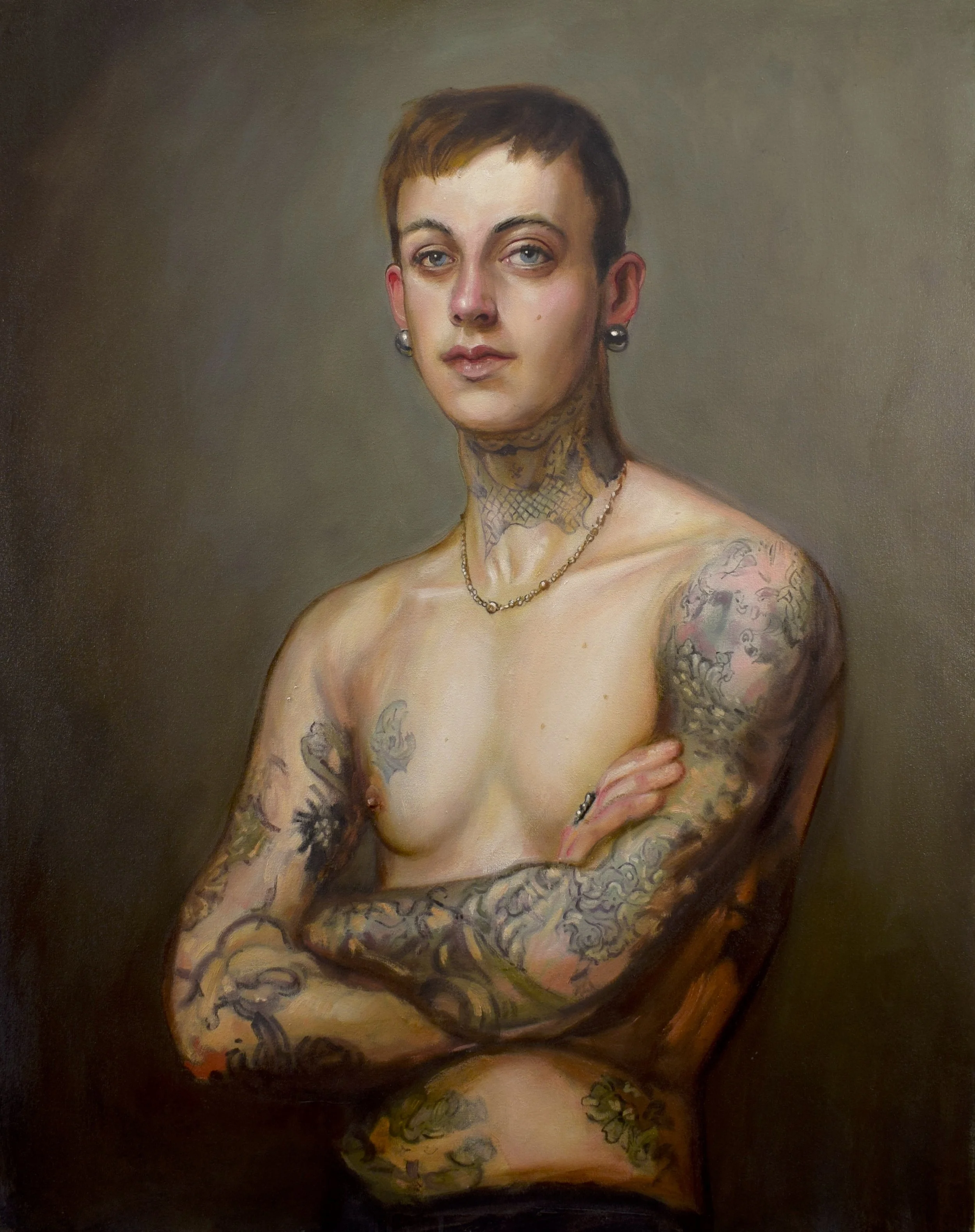
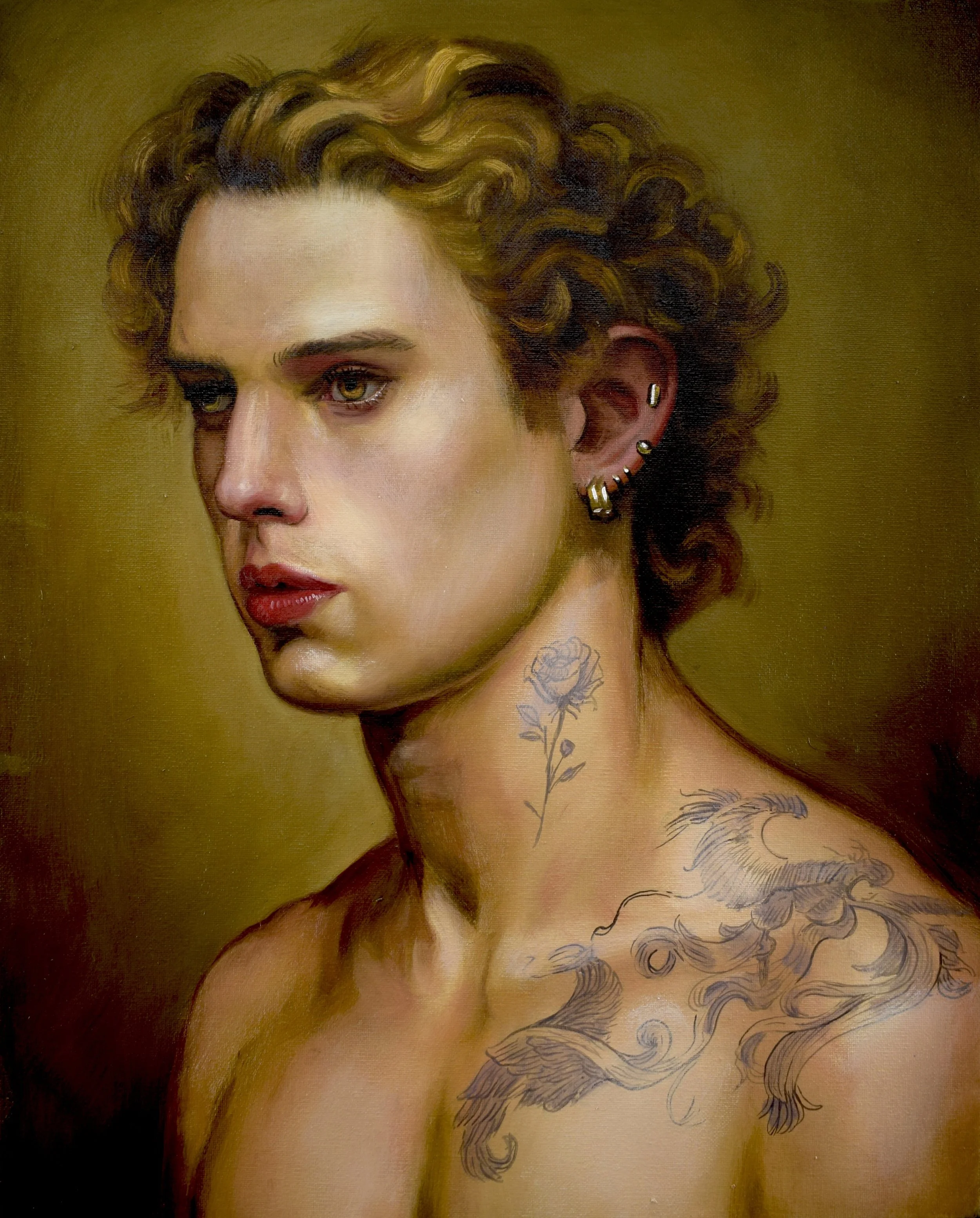
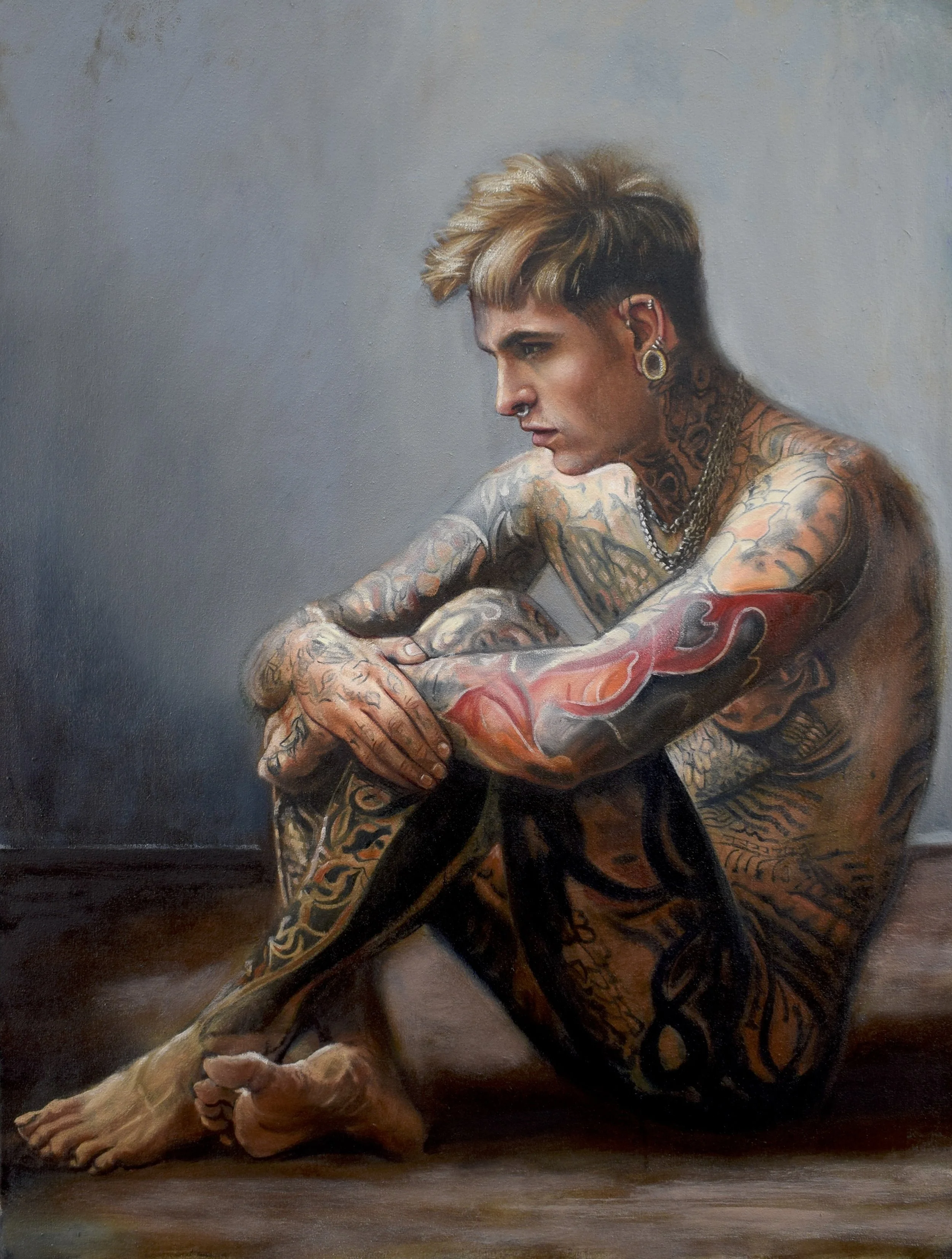
In His Skin, 2025, Oil on Canvas, 94 x 74 cm
Per Vilt is not a fixed identity but an assumed one — a constructed name through which questions of authorship, authenticity, and representation can be held open rather than resolved. This deliberate ambiguity sits at the center of Paint and Ink, an exhibition shaped by a moment of rapid technological change, where images circulate endlessly and identity is increasingly fluid, curated, and performed. Working between Berlin and Brandenburg, and trained in Canada, Vilt positions painting within this unstable terrain, using the slow language of oil paint to respond to the speed and volatility of digital culture.
The figures that populate Paint and Ink originate as AI-generated images: invented people without histories, bodies formed through algorithmic probability rather than lived experience. Yet these artificial origins are not the endpoint. Instead, they become the raw material for a deeply traditional act — painting by hand. This translation from digital image to oil on canvas introduces friction: time interrupts immediacy, touch replaces automation, and interpretation supersedes generation. In choosing to paint AI images rather than present them digitally, Vilt asserts the continued relevance of the human hand as a site of meaning, care, and resistance.
Throughout the exhibition, tattooed and pierced bodies function as central visual and conceptual anchors. Tattooing, once marginal, has become increasingly visible and accepted in contemporary culture, coinciding with the rise of social media, self-branding, and online self-construction. In Paint and Ink, Tattoos serve as a counterpoint to the artificial origin of the figures — marks of individuality, intention, and lived choice layered onto bodies that began as simulations. Ink becomes a form of self-authorship, an insistence on agency within systems that tend toward abstraction and repetition.
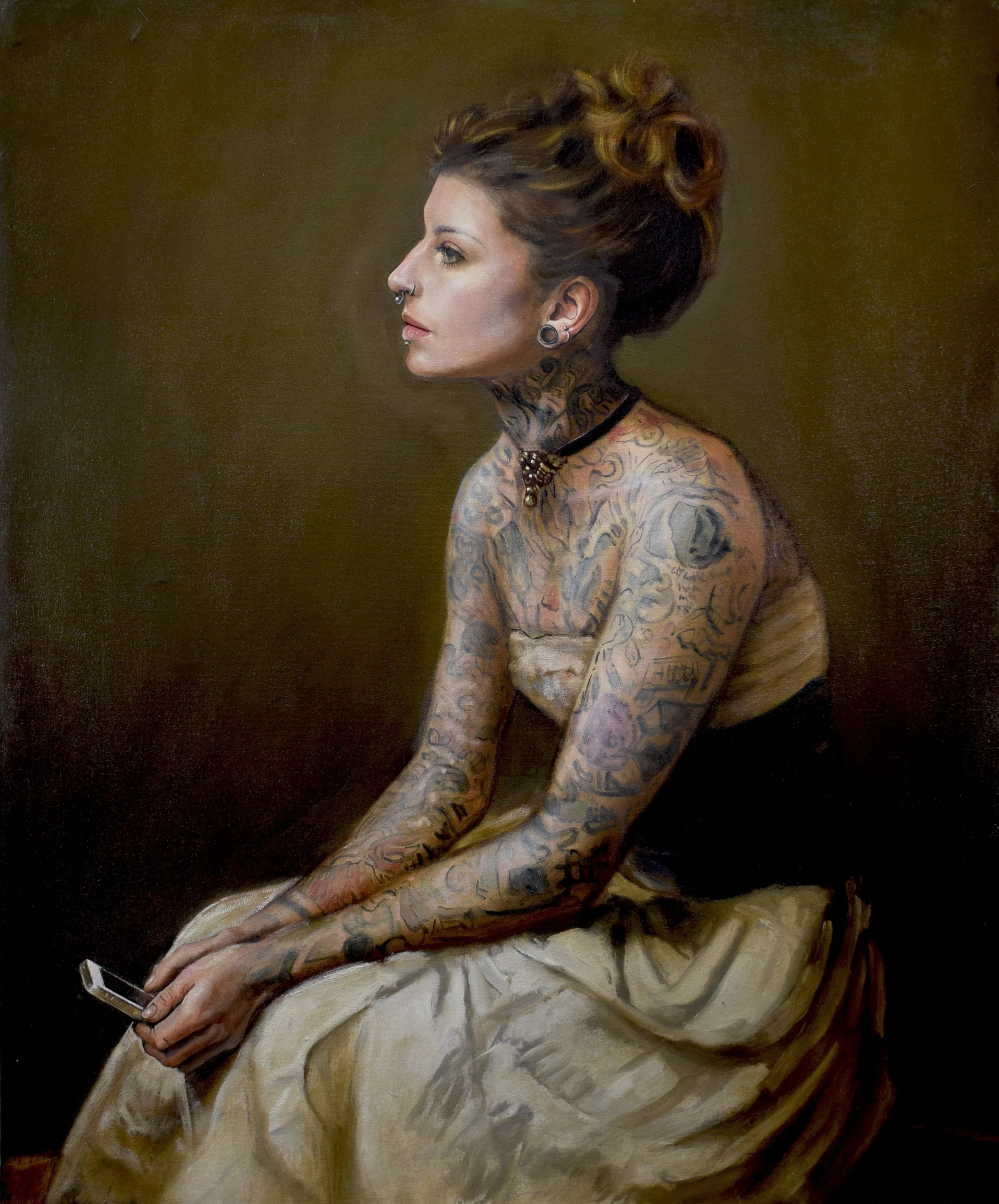
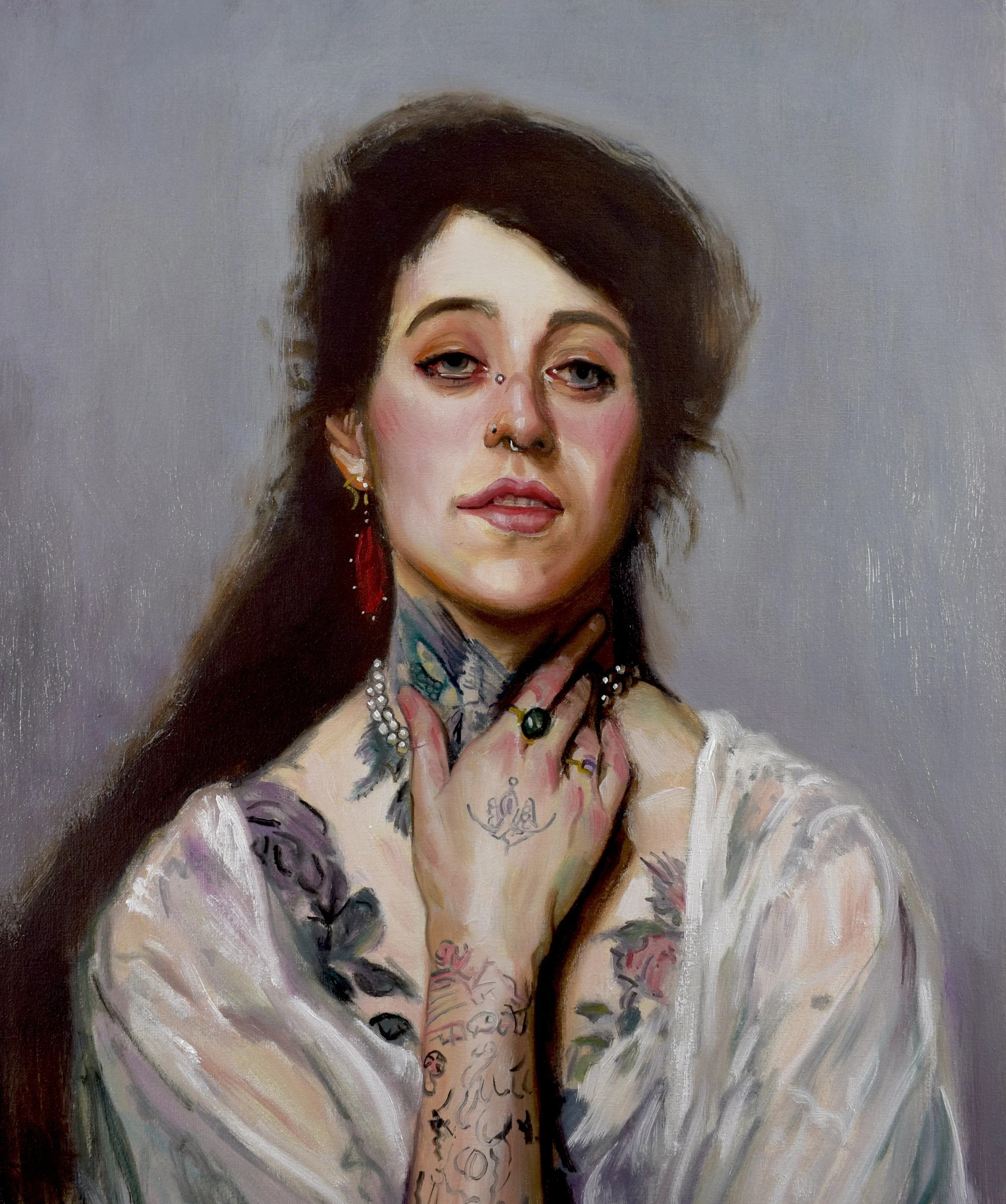
Update, 2025, Oil on Canvas, 94 x 80 cm
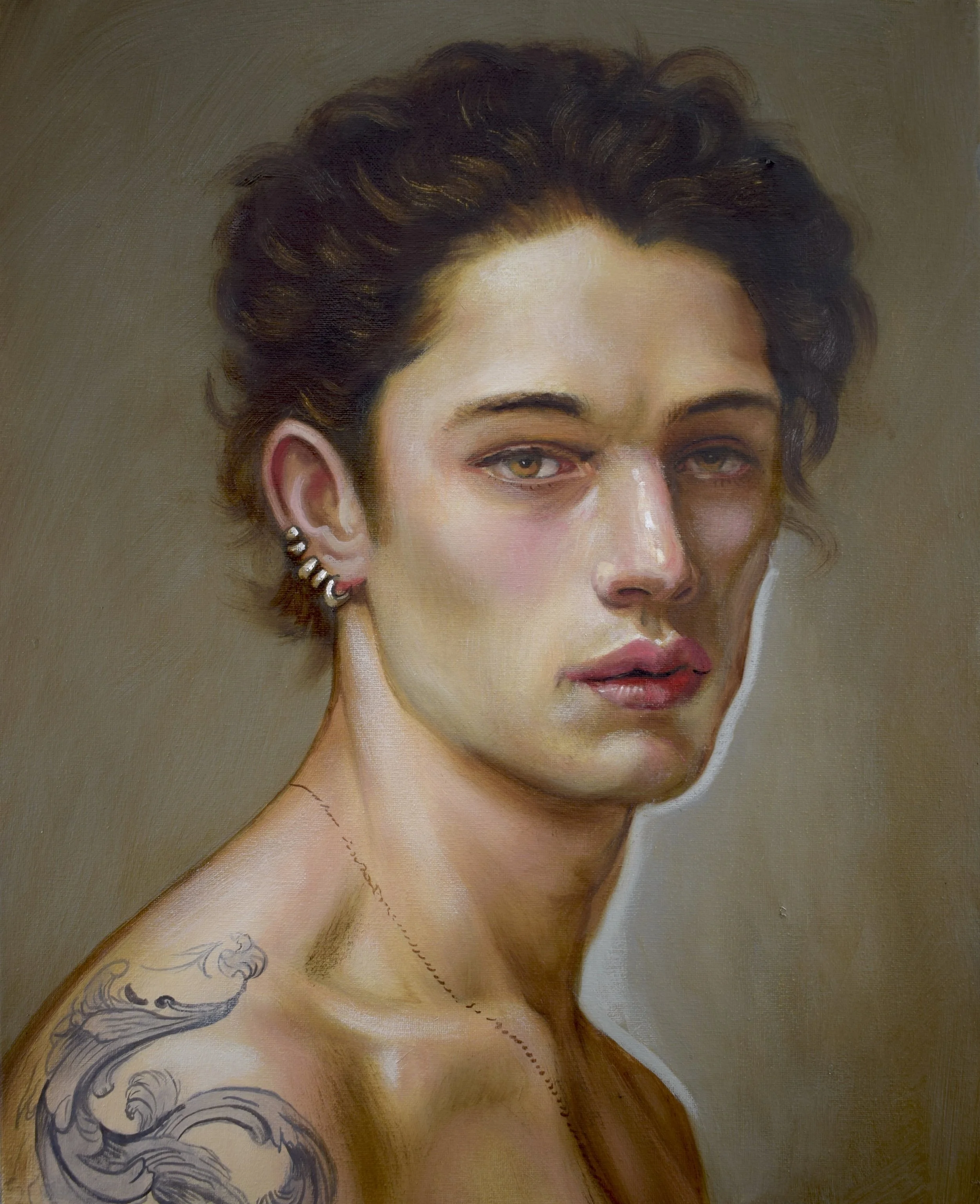
This tension between permanence and flux runs throughout the exhibition. Works such as In His Skin and Update draw on the formal structures of European portraiture — frontal gazes, profile views, composed stillness — while replacing historical symbols of class, profession, or lineage with contemporary signs of self-definition. Similarly, Heathen Son, Her True Heart, and Left in Wonder echo the balance, restraint, and attention to flesh found in historical portrait painting, yet shift meaning inward, allowing tattoos and posture to replace allegory and costume as carriers of identity.
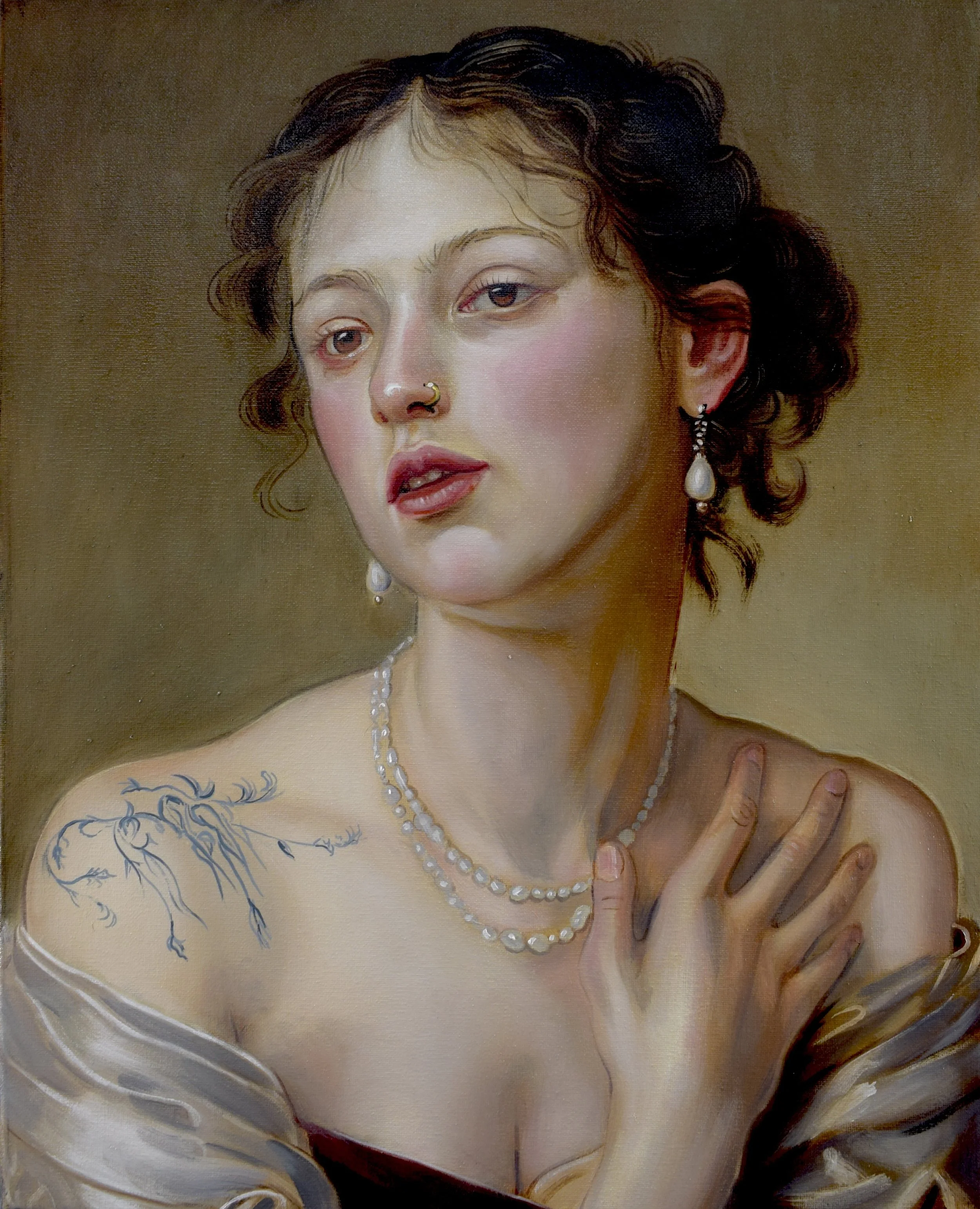
Left in Wonder, 2025, Oil on Canvas, 50 x 40 cm
Her True Heart, 2025, Oil on Canvas, 50 x 40 cm
Heathen Son, 2025, Oil on Canvas, 50 x 40 cm
Vilt’s engagement with art history is neither nostalgic nor ironic. In Judith and Maja, familiar subjects from European painting are reimagined as women in control of their representation. Judith’s hand at her throat subtly recalls the beheading that defines her biblical story, transforming violence into contained resolve, while Maja consciously presents herself above her social station, reclaiming the gaze once imposed upon her. These works align with the exhibition’s broader concern: who controls the image, and how power is expressed through visibility.
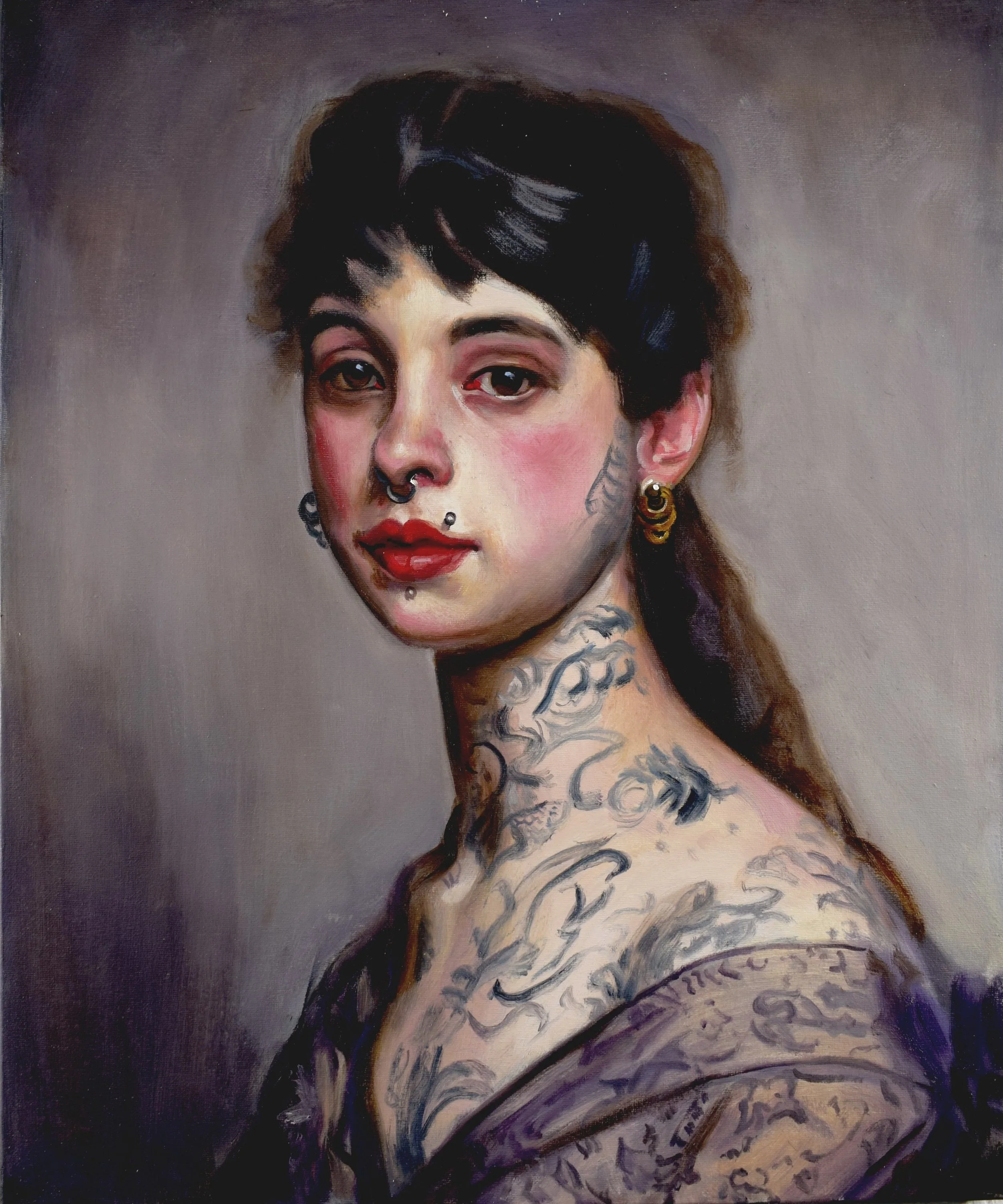
Judith, 2025, Oil on Canvas, 60 x 50 cm
Maja, 2025, Oil on Canvas, 60 x 50 cm
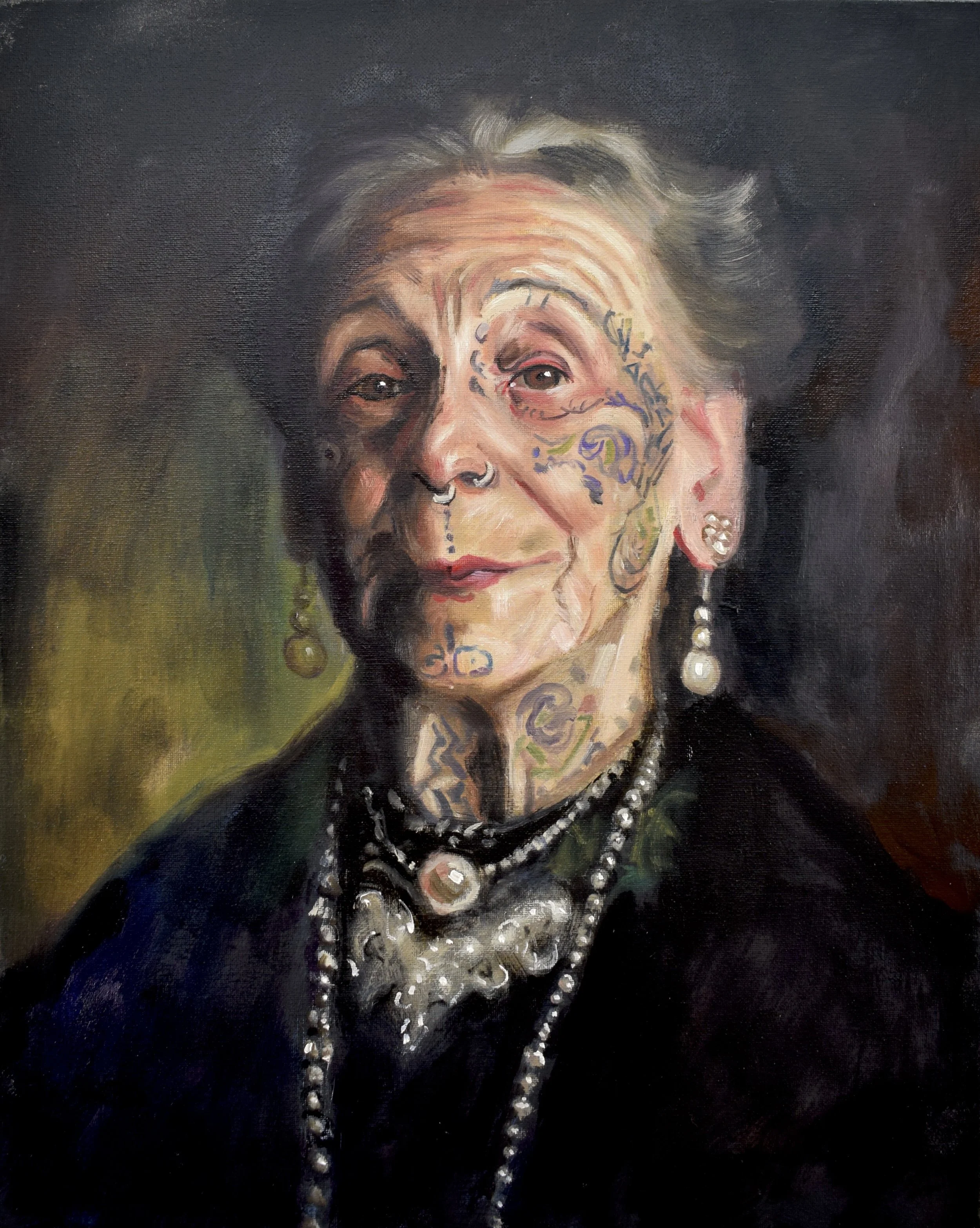
Questions of time and continuity surface in In One Person, When She Was Young, and When She Was Not So Young. Referencing John Irving’s novel, In One Person frames identity as plural and evolving, refusing singular definitions. The paired paintings When She Was Young and When She Was Not So Young complicate assumptions about age and biography: the women appear the same age, yet the titles destabilize linear narratives of experience. We do not know when their tattoos were acquired — a deliberate ambiguity that resists moral or generational readings of self-expression.
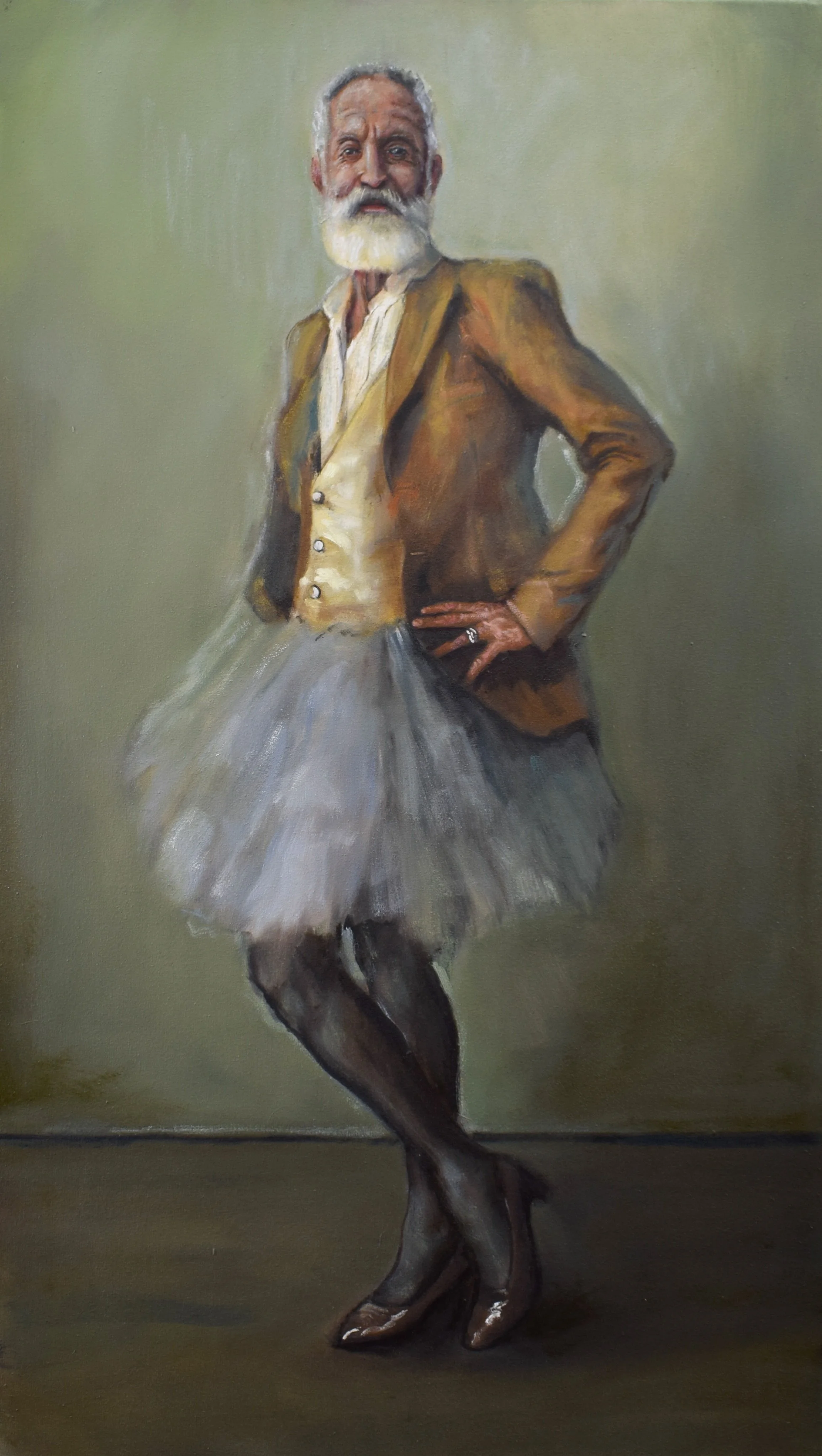
In One Person, 2025, Oil on Canvas, 94 x 80 cm
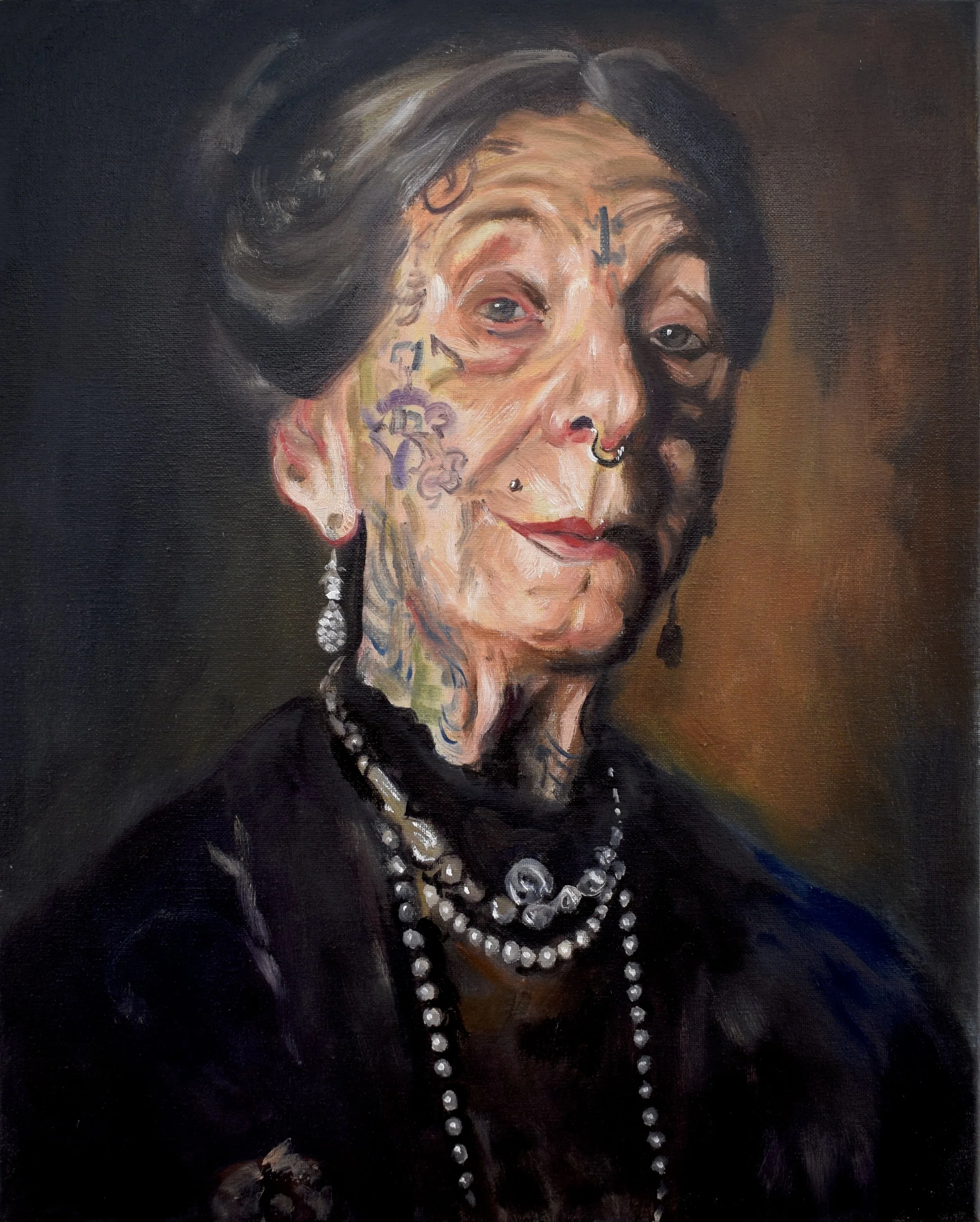
When She was Young, 2025, Oil on Canvas, 50 x 40 cm
When She was not so Young, 2025, Oil on Canvas, 50 x 40 cm
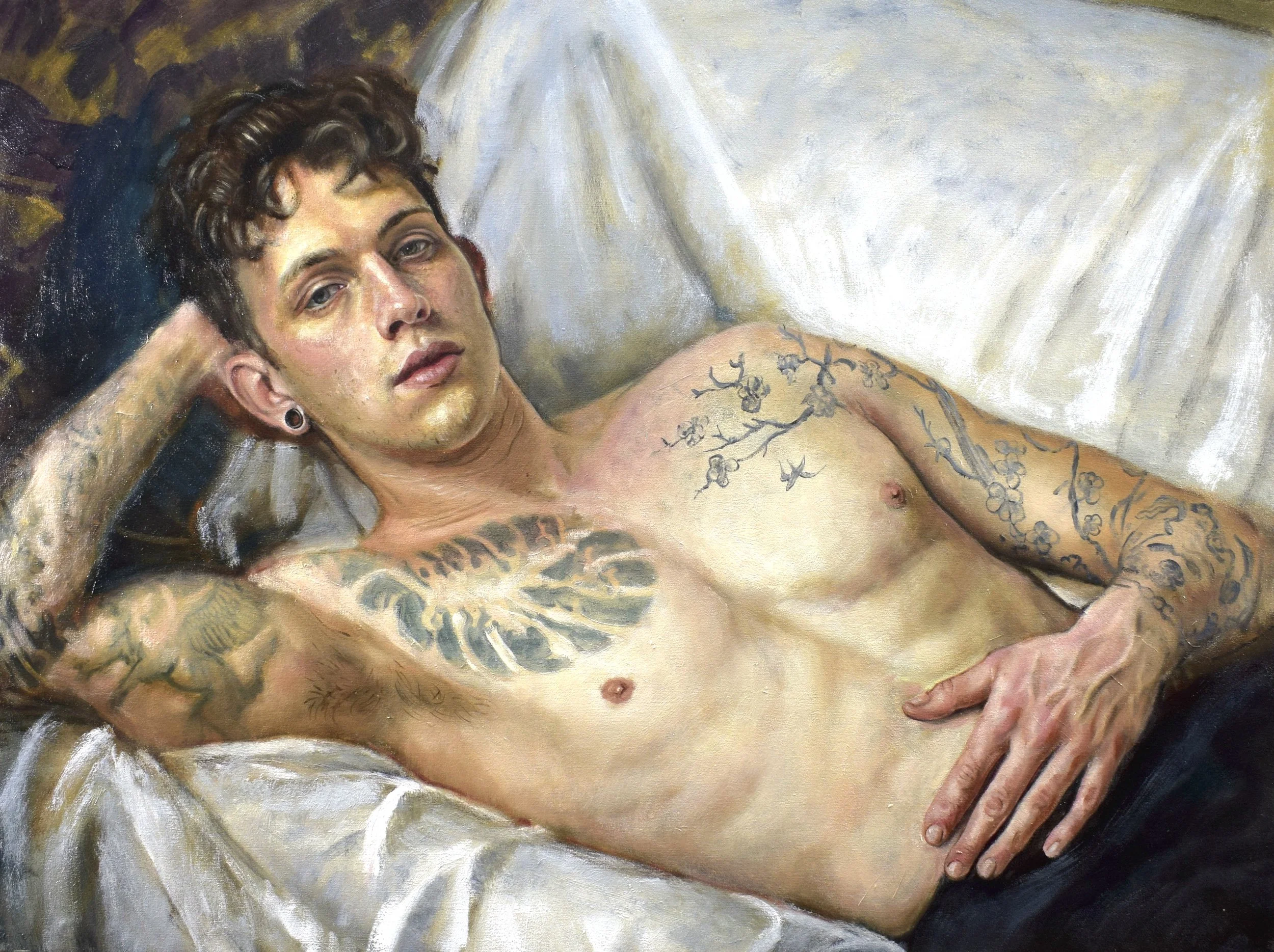
The Rest of the Night, 2025, Oil on Canvas, 50 x 40 cm
The reclining figure in The Rest of the Night further situates the exhibition within a long lineage of European painting, from Renaissance nudes to modern disruptions of the genre. Here, the subject’s ease and direct gaze reject idealization and passivity, offering instead a quiet assertion of bodily autonomy. Likewise, To the Bone and Under Her Skin shift toward introspection, presenting seated figures whose tattoos read less as surface decoration than as evidence of interior life — experiences absorbed, remembered, and carried.
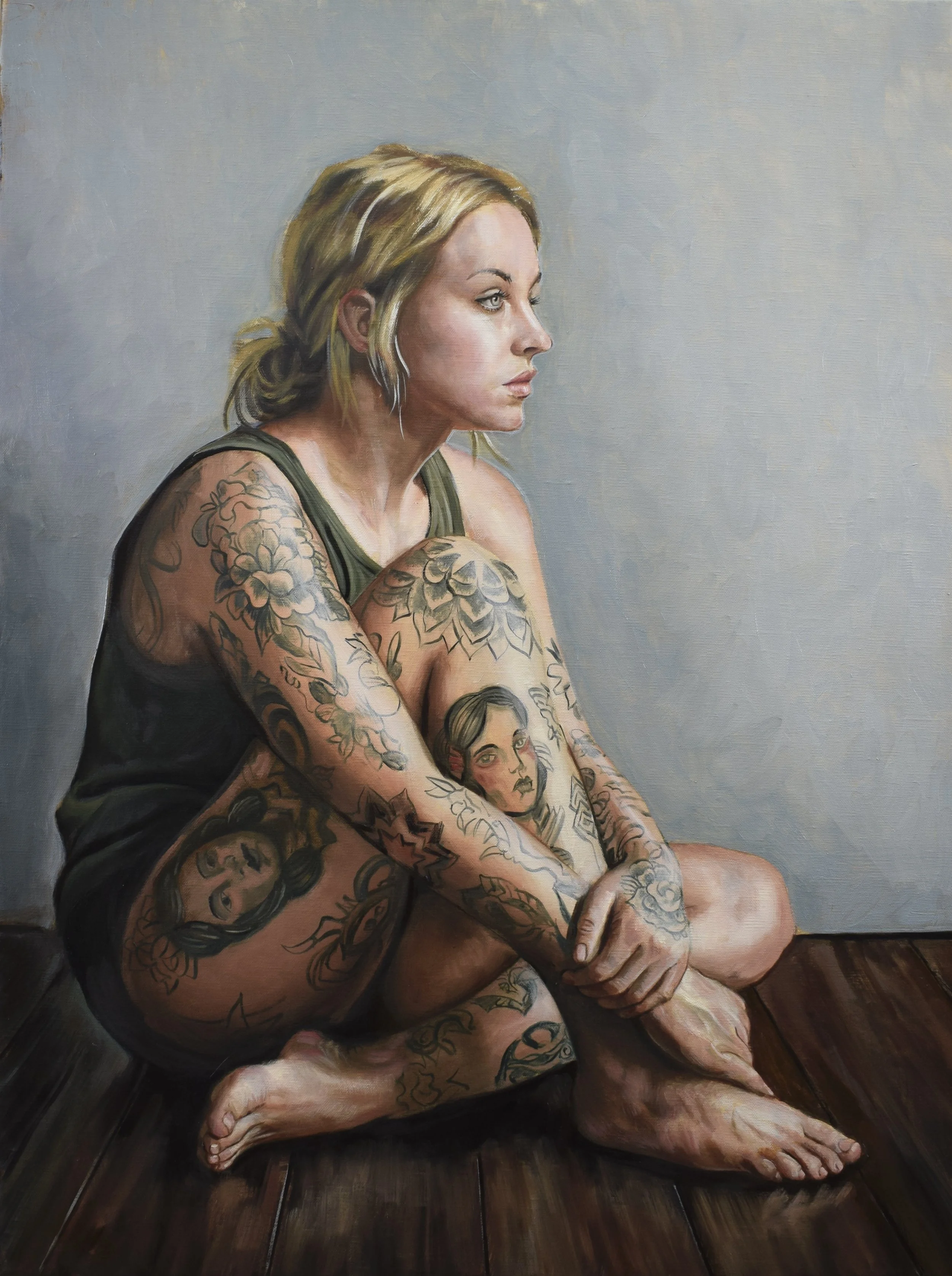
Under Her Skin, 2025, Oil on Canvas, 80 x 60 cm
To the Bone, 2025, Oil on Canvas, 80 x 60 cm
Across Paint and Ink, paint represents duration, memory, and historical continuity, while ink signifies immediacy, choice, and the living body. Though tattoos are often read as display, they are frequently deeply personal and placed where they remain unseen, existing without the need for an audience. Against the backdrop of social media — where identity is constantly externalized and validated through visibility — the tattoo becomes a quiet counterpoint: a permanent, embodied decision that resists constant presentation. In this tension between exposure and privacy, Paint and Ink reflects on how identity is formed today, balancing digital image-making with intimate acts of self-definition anchored in the body.
By translating artificial images into human presence, Per Vilt does not reject technology, but slows it down, asking what remains meaningful when images are no longer scarce and identity is endlessly editable. In this space between paint and ink, past and present, simulation and touch, Paint and Ink insists that representation still matters — and that the human impulse to mark, narrate, and claim the self endures, even as its tools continue to change.
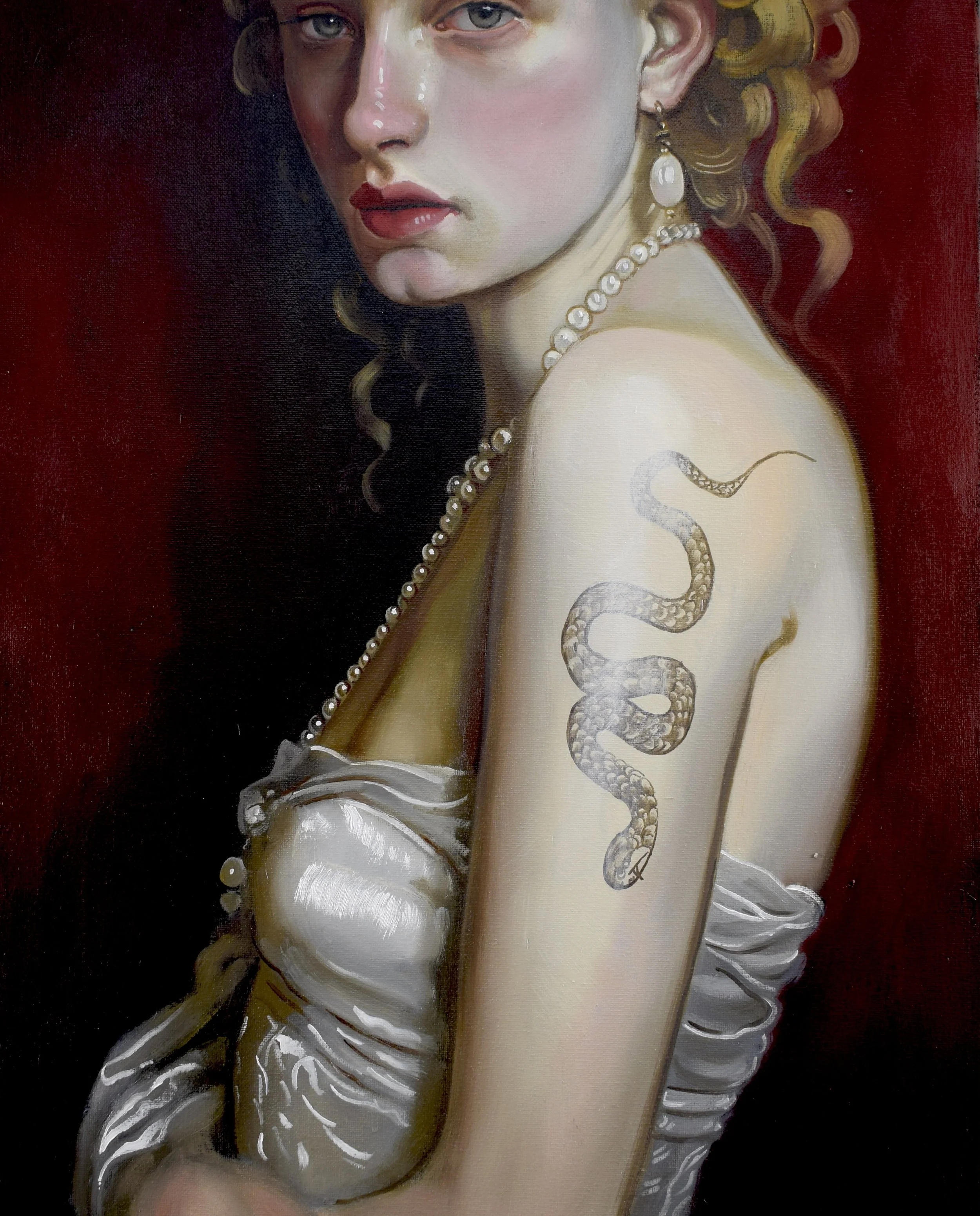
Snake, 2025, Oil on Canvas, 50 x 40 cm